
Service Delivery Deferred Is Dignity Delayed, Says Premier Ntuli
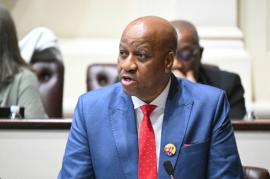
KwaZulu-Natal Premier Thamsanqa Ntuli has issued a strong call for municipalities to deliver basic services timeously and efficiently, warning that delayed service delivery does more than inconvenience communities; it weakens public trust and compromises human dignity. According to SAnews, Ntuli made the remarks during the National Council of Provinces Report Back Session held at the KwaZulu-Natal Legislature on Tuesday, under the theme “Confronting the Challenges Facing the Timely Delivery of Viable Municipalities for Enhanced Delivery of Basic Services to Communities”.
The Premier’s message placed the daily experiences of residents at the centre of the governance debate. For many communities, service delivery is not an abstract policy issue. It is the water that must flow from a tap, the road that must be safe to travel, the electricity that must power a home, the refuse that must be collected and the municipal office that must respond when people need help. When these services are delayed, families do not only lose convenience; they lose time, safety, productivity and confidence in the institutions meant to serve them.
Ntuli said delays in the provision of basic services deepen existing backlogs and erode public confidence in government. His warning reflects a broader reality across local government: when communities wait too long for visible improvements, frustration grows and trust declines. Municipal backlogs often become more expensive and more difficult to resolve the longer they are left unattended. A damaged road becomes more dangerous, a leaking pipe becomes a wider water-loss problem, and a delayed infrastructure project can hold back schools, clinics, businesses and households.
The Premier described timely service delivery as essential to unlocking blockages, addressing long-standing backlogs and rebuilding trust between government and the people it serves. This is an important shift in tone because it frames service delivery as a measure of dignity, not only administration. A municipality’s performance is felt in people’s daily lives. When services work, communities experience stability and confidence. When services fail or are postponed, residents feel ignored, and government’s promise of development begins to sound distant.
Ntuli emphasised that municipalities remain at the frontline of service delivery and must be supported, capacitated and held accountable. This balanced message recognises that municipalities often face real constraints, including limited revenue, ageing infrastructure, skills shortages and governance weaknesses. However, support cannot replace accountability. Communities need municipalities that are properly resourced, professionally managed and responsible for delivering measurable improvements. A municipality that is supported but not held accountable can still fail its residents.
The call for stronger coordination across all spheres of government was another key part of the Premier’s address. Many service delivery problems cannot be solved by municipalities alone. Roads, housing, water, sanitation, energy, public safety and local economic development often require cooperation between local, provincial and national government. When these spheres work in silos, projects stall, responsibilities become blurred and communities suffer. Ntuli’s message was that service delivery must be integrated, practical and sustainable.
The NCOP Report Back Session provided a platform to assess service delivery challenges, strengthen accountability and ensure that government interventions respond directly to community needs. Such sessions are important because they connect legislative oversight with the realities of local communities. They create space to ask whether government programmes are reaching people, whether municipalities are functioning effectively and whether interventions are solving the right problems. Oversight only matters when it leads to action that communities can see and feel.
Ntuli said the KwaZulu-Natal Provincial Government remains committed to strengthening municipal functionality and improving the delivery of basic services across the province. This commitment is especially important in a province where municipalities are responsible for communities with different needs, from rural villages and small towns to large urban centres and coastal economic hubs. Strengthening municipal functionality means improving planning, budgeting, maintenance, billing, leadership, technical capacity and public communication. Without these foundations, service delivery becomes reactive instead of reliable.
The Premier also linked service delivery to measurable progress. He said government must remain focused on responsive institutions and effective delivery that restores dignity and improves quality of life. This places pressure on public institutions to move beyond promises and produce outcomes. Communities do not measure government by strategic plans alone. They measure it by whether a blocked drain is repaired, whether a clinic is accessible, whether a road is maintained and whether officials respond when residents raise concerns.
Ntuli also reflected on KwaZulu-Natal’s successful hosting of the 46th Southern African Development Community Summit at the Inkosi Albert Luthuli International Convention Centre in Durban. He said the event reinforced the province’s position as a leading destination for major continental and international events. While the summit raised KwaZulu-Natal’s profile and contributed to tourism, investment and economic activity, the Premier’s broader message suggested that a province capable of hosting major international gatherings must also show strong delivery in the everyday services that residents depend on.


