
Government Calls on Families Who Lost Relatives in Exile in Angola to Come Forward
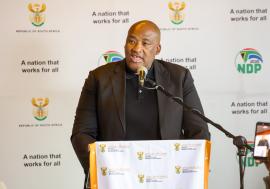
Government is calling on South African families whose loved ones died, disappeared or were buried in Angola during the liberation struggle to come forward and register with the South African Heritage Resources Agency. According to SAnews, the call follows the official launch of the Angola phase of South Africa’s Exile Repatriation Programme, which was announced at a media briefing in Pretoria by the Department of Sport, Arts and Culture and SAHRA. The programme is aimed at helping families find answers after decades of uncertainty, grief and silence.
The Angola phase forms part of a broader national effort to trace, identify and repatriate South Africans who died in exile during the fight against apartheid. Many families still do not know where their relatives were buried, what happened to them, or whether their remains can be returned home. For these families, the programme is not only an administrative process. It is a deeply emotional journey toward closure, dignity and historical justice.
The Exile Repatriation Project gives effect to recommendations of the Truth and Reconciliation Commission, which called on government to continue tracing people who disappeared in political circumstances between 1960 and 1994. The liberation struggle scattered many South Africans across the continent and beyond, with thousands leaving the country to join political movements, military training camps, education networks and solidarity structures. Some never returned. Others died far from home, buried in places their families never had the chance to visit.
Cabinet approved the Angola initiative in March 2026 as part of government’s Five-Year Exile Repatriation Plan. The programme also gives effect to the Memorandum of Understanding signed between South Africa and Angola in December 2024 under the Roads to Independence: African Liberation Heritage Programme. This partnership recognises Angola’s central role in the history of South Africa’s liberation struggle, as the country hosted many South Africans who fled apartheid repression and became part of the wider regional movement for freedom.
Sport, Arts and Culture Minister Gayton McKenzie said the programme is about restoring dignity to families who have waited many years without answers. He described the pain of families whose loved ones left home during the struggle and were never seen again, saying that there are hundreds of families still carrying that loss. His message was that the waiting must come to an end, and that government is now creating a formal pathway for families to register cases, provide information and participate in the process of exhumation, forensic identification and repatriation.
Angola has been identified as the immediate focus because it holds the largest concentration of South Africans who died in exile during the liberation struggle. This makes the country a critical starting point for the repatriation programme. The work will require careful coordination between South African and Angolan authorities, heritage experts, forensic specialists, historians, archives, political organisations and families. It is a sensitive process because it deals not only with physical remains, but with memory, trauma, identity and national history.
Government has emphasised that the programme is open to all South African families, regardless of political affiliation or organisational membership. This is an important point because the pain of loss during the liberation struggle was not limited to one organisation, movement or community. The programme is intended to honour South Africans who died in exile and to support families who have carried unanswered questions across generations. By making the process inclusive, government is framing the repatriation effort as a national act of remembrance rather than a narrow political exercise.
Families who believe their relatives died, disappeared or were buried in Angola are being encouraged to contact SAHRA and register their cases. Their information may help researchers and forensic teams identify burial sites, confirm identities and plan future repatriations. Family testimony is especially valuable because official records from the exile period may be incomplete, scattered or difficult to verify. Names, dates, photographs, letters, organisational links, last known locations and personal memories could all contribute to reconstructing the story of those who never came home.
The repatriation programme also carries wider national meaning. It is part of South Africa’s ongoing work to confront the unfinished business of the past. Political freedom did not automatically heal every wound created by apartheid and exile. Many families entered democracy still mourning in uncertainty, without graves to visit or official confirmation of what happened to their loved ones. Returning remains, where possible, allows families to conduct cultural, spiritual and personal rites that were denied to them for decades.


