
First Lady Calls for Regional Action to Give Children a Stronger Start in Life
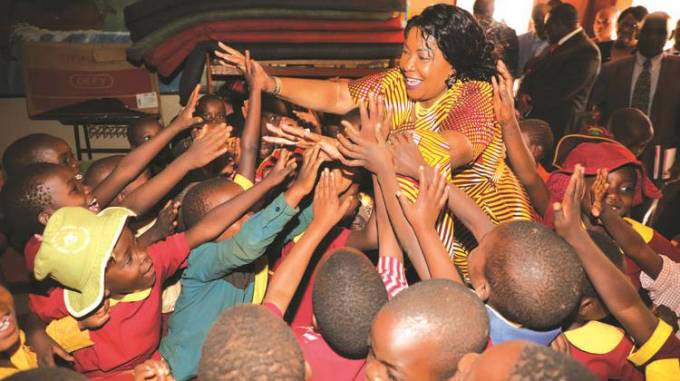
First Lady Dr Tshepo Motsepe has called on Southern African countries to work together to strengthen Early Childhood Development, saying the region’s future depends on the quality of care, learning and support given to its youngest citizens today. Speaking at a spousal luncheon hosted for First Ladies from Southern African Development Community countries on the margins of the 46th SADC Summit in Durban, Dr Motsepe placed children at the centre of the regional development agenda. Her message was clear: a stronger Southern Africa begins with children who are healthy, protected, stimulated and given the opportunity to learn from the earliest years of life.
Dr Motsepe described Early Childhood Development as one of the most important foundations for human development, because the first years of a child’s life shape language, emotional wellbeing, confidence, learning ability and long-term opportunity. When children receive proper nutrition, safe care, play-based learning and emotional support, they are better prepared for school and more likely to succeed later in life. Her address reminded regional leaders and partners that ECD is not a soft social issue, but a powerful investment in education, health, equality and future economic growth.
The First Lady acknowledged that South Africa has made progress in expanding access to early learning, but she also highlighted the scale of the challenge still facing the country. Millions of young children remain outside structured early learning programmes, meaning many begin formal schooling already behind their peers. This gap can follow children through the education system and into adulthood. Dr Motsepe’s call therefore focused on urgent action to ensure that every child, regardless of background, income or location, can access the kind of early support that builds confidence and unlocks potential.
Her message to SADC First Ladies carried a strong regional meaning. Many countries in Southern Africa face similar challenges, including poverty, food insecurity, rural service gaps, under-resourced childcare centres, limited practitioner training and uneven access to early learning. By calling for regional action, Dr Motsepe encouraged countries to share knowledge, learn from successful programmes and build partnerships that can improve child development across borders. The future of the region will be shaped not only by trade, infrastructure and diplomacy, but by how well it cares for its children.
The timing of the call was important. The SADC Summit brought together regional leaders to discuss integration, development and shared prosperity, and Dr Motsepe’s intervention added a deeply human dimension to those discussions. Roads, ports, energy systems and industrial growth are essential, but they must ultimately serve people. Early Childhood Development sits at the beginning of that development chain. A child who is well nourished, emotionally supported and ready to learn becomes a learner with stronger prospects, a young person with better choices and, eventually, an adult able to contribute meaningfully to society.
Dr Motsepe also linked her appeal to South Africa’s National Development Plan 2030, which recognises early childhood development as a key priority for reducing inequality and improving long-term outcomes. ECD is one of the most effective ways to break cycles of poverty because it supports children before disadvantage becomes deeply entrenched. If children from poor communities receive quality early learning and care, they are given a stronger chance to enter school ready to succeed. This makes ECD both an education strategy and a social justice intervention.
A central part of the First Lady’s message was that quality early learning should be treated as a right, not a privilege. Too often, children from wealthier households have access to better facilities, trained practitioners and learning resources, while children in poorer communities depend on underfunded centres or have no access at all. Recognising ECD as a right changes the conversation. It requires governments, municipalities, civil society, the private sector and communities to build systems that reach every child, especially those most at risk of being left behind.
Dr Motsepe acknowledged the work being done by the Department of Basic Education to expand and transform the ECD sector, including efforts around registration, funding, quality improvement and support for practitioners. She also recognised the contribution of civil society organisations that work closely with communities, parents and early learning centres. These organisations often understand the daily realities of children and caregivers, and their experience is vital in designing practical solutions that can work in both urban and rural settings.
The luncheon also highlighted the importance of training and supporting ECD practitioners. A strong early learning system depends not only on buildings and policies, but on the women and men who care for children every day. Practitioners need training, resources, fair recognition and ongoing support to provide quality learning through play, storytelling, movement, creativity and emotional connection. When practitioners are strengthened, children benefit directly. When children benefit, families, schools and communities are strengthened too.
The role of local government and the private sector was also central to the discussion. Municipalities can support ECD through safe facilities, zoning, water, sanitation and community planning, while businesses can contribute through funding, infrastructure, workplace family support and partnerships with credible child-development organisations. The First Lady’s call points to a model where ECD is not left to one department alone, but becomes a shared mission involving the whole of society. Children thrive when the systems around them work together.


