
Gayton McKenzie's Promises of Promoting Spinning Sport in South Africa Gaining Momentum
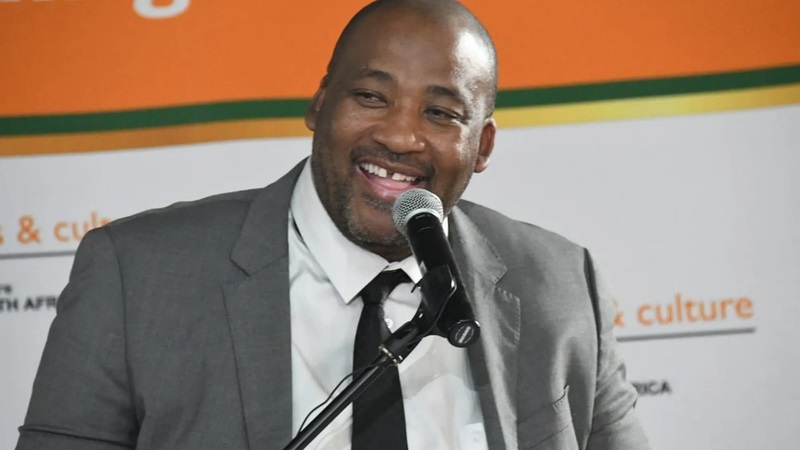
Gayton McKenzie appears to be delivering on his commitment to elevate spinning as one of South Africa's major sports, recently announcing the involvement of a prominent sponsor for the activity.
In a Facebook Live post just before his swearing-in three months ago, the Minister of Sport, Arts, and Culture expressed his desire to leverage the motorsport of spinning as a means to steer young people away from gangsterism and into more constructive activities.
Originally, the practice of spinning tires emerged in the townships as a ritual to honor fallen gangsters during the apartheid era, but it has since transformed into a popular motorsport in South Africa.
Despite its growing popularity, spinning remains a niche sport with limited designated race tracks available for enthusiasts to safely engage in the activity. Additionally, there exists a negative stigma associated with spinning, particularly in colored, Indian, and black townships, where many practice it on the streets, making it illegal and perceived as dangerous.
Recently, however, two significant spinning events took place in South Africa, with McKenzie personally attending both. The first event, "Wie's die Hond se Baas?" was held at Cape Town's Killarney race track and is part of a series targeting amateur spinners across all nine provinces. The second event was the Red Bull show run in Sandton, Johannesburg, where professional spinners showcased their skills in a street setting.
During the Cape Town event, McKenzie revealed that a major cellphone company is set to invest heavily in spinning, providing participants with salaries and opportunities to practice their craft in secure environments. "We are going to announce a big international cellphone company that is going to sponsor spinning going forward," he stated. "Spinners are going to get salaries. We are going to formalize and professionalize this sport. Things are going to change."
He emphasized the importance of putting politics aside to help keep children off the streets and onto the tracks. "I'm going to invite the president of the country to the next spinning event so he can see what we are doing here," McKenzie added.
Mary-Anne Wakefield, a motorsport TikTok influencer, shared insights about the event, noting that McKenzie is personally financing "Wie's die Hond se Baas?" She reported that the Cape Town event was the largest so far, with 69 entries, and that all ticket proceeds were allocated to Killarney in exchange for venue use.
Each province will have three winners, culminating in a national competition with 27 drivers. McKenzie is funding the prize money: R20,000 for first place, R15,000 for second, and R10,000 for third, with an additional R5,000 for the Driver of the Day, and no entry fees for participants.
Wakefield expressed enthusiasm for the unity emerging within the spinning community since McKenzie took over. "There is a buzz around the spinning community, who seem united in their goal to grow the sport," she said. "This competition has created excitement, fostering camaraderie among participants who have typically been divided."
Despite the challenges, McKenzie's efforts to legitimize and promote spinning as a viable sport are generating momentum and hope for a brighter future in South Africa's motorsport landscape.
In a Facebook Live post just before his swearing-in three months ago, the Minister of Sport, Arts, and Culture expressed his desire to leverage the motorsport of spinning as a means to steer young people away from gangsterism and into more constructive activities.
Originally, the practice of spinning tires emerged in the townships as a ritual to honor fallen gangsters during the apartheid era, but it has since transformed into a popular motorsport in South Africa.
Despite its growing popularity, spinning remains a niche sport with limited designated race tracks available for enthusiasts to safely engage in the activity. Additionally, there exists a negative stigma associated with spinning, particularly in colored, Indian, and black townships, where many practice it on the streets, making it illegal and perceived as dangerous.
Recently, however, two significant spinning events took place in South Africa, with McKenzie personally attending both. The first event, "Wie's die Hond se Baas?" was held at Cape Town's Killarney race track and is part of a series targeting amateur spinners across all nine provinces. The second event was the Red Bull show run in Sandton, Johannesburg, where professional spinners showcased their skills in a street setting.
During the Cape Town event, McKenzie revealed that a major cellphone company is set to invest heavily in spinning, providing participants with salaries and opportunities to practice their craft in secure environments. "We are going to announce a big international cellphone company that is going to sponsor spinning going forward," he stated. "Spinners are going to get salaries. We are going to formalize and professionalize this sport. Things are going to change."
He emphasized the importance of putting politics aside to help keep children off the streets and onto the tracks. "I'm going to invite the president of the country to the next spinning event so he can see what we are doing here," McKenzie added.
Mary-Anne Wakefield, a motorsport TikTok influencer, shared insights about the event, noting that McKenzie is personally financing "Wie's die Hond se Baas?" She reported that the Cape Town event was the largest so far, with 69 entries, and that all ticket proceeds were allocated to Killarney in exchange for venue use.
Each province will have three winners, culminating in a national competition with 27 drivers. McKenzie is funding the prize money: R20,000 for first place, R15,000 for second, and R10,000 for third, with an additional R5,000 for the Driver of the Day, and no entry fees for participants.
Wakefield expressed enthusiasm for the unity emerging within the spinning community since McKenzie took over. "There is a buzz around the spinning community, who seem united in their goal to grow the sport," she said. "This competition has created excitement, fostering camaraderie among participants who have typically been divided."
Despite the challenges, McKenzie's efforts to legitimize and promote spinning as a viable sport are generating momentum and hope for a brighter future in South Africa's motorsport landscape.


